Oil Changes and Tire Services in Minnetonka, MN: What to Expect at BAM! Automotive
When fall arrives in Minnetonka, Minnesota winters follow quickly — and your car's oil and tires feel that transition before you do. Cold temperatures thicken conventional oil, making it harder to circulate on start-up, while every 10°F drop in outside air pressure pulls roughly 1 PSI out of each tire. Handling both in a single fall appointment means you head into the hardest driving season with your vehicle already dialed in.
An independent shop handles all makes and models, keeps a running history of your car, and gives you a direct conversation with the technician — something a large dealership quick-lane rarely offers. This post walks through exactly what a combined oil change service and tire visit involves, why the timing matters, and what to look for before the first Minnesota snowfall.
Why Is Fall the Right Time for an Oil Change and Tire Check?
Fall is the last practical window to catch small problems before cold weather turns them into roadside emergencies, making September and October the smart prep period for Minnetonka drivers.
Motor oil breaks down over time and loses its ability to protect engine parts during cold cranks. In Minnesota, where overnight lows can drop below zero by November, worn oil is a real risk. Catching the service before that first cold snap means your engine is lubricated properly from the moment temps plummet.
Tire pressure is equally time-sensitive. Those 1 PSI drops add up across several cool nights, and many drivers first notice their TPMS warning light in October — often on a morning they are already running late. Addressing tire pressure proactively, rather than reactively, keeps handling predictable on wet fall roads.
What's Included in a Full-Service Oil Change?
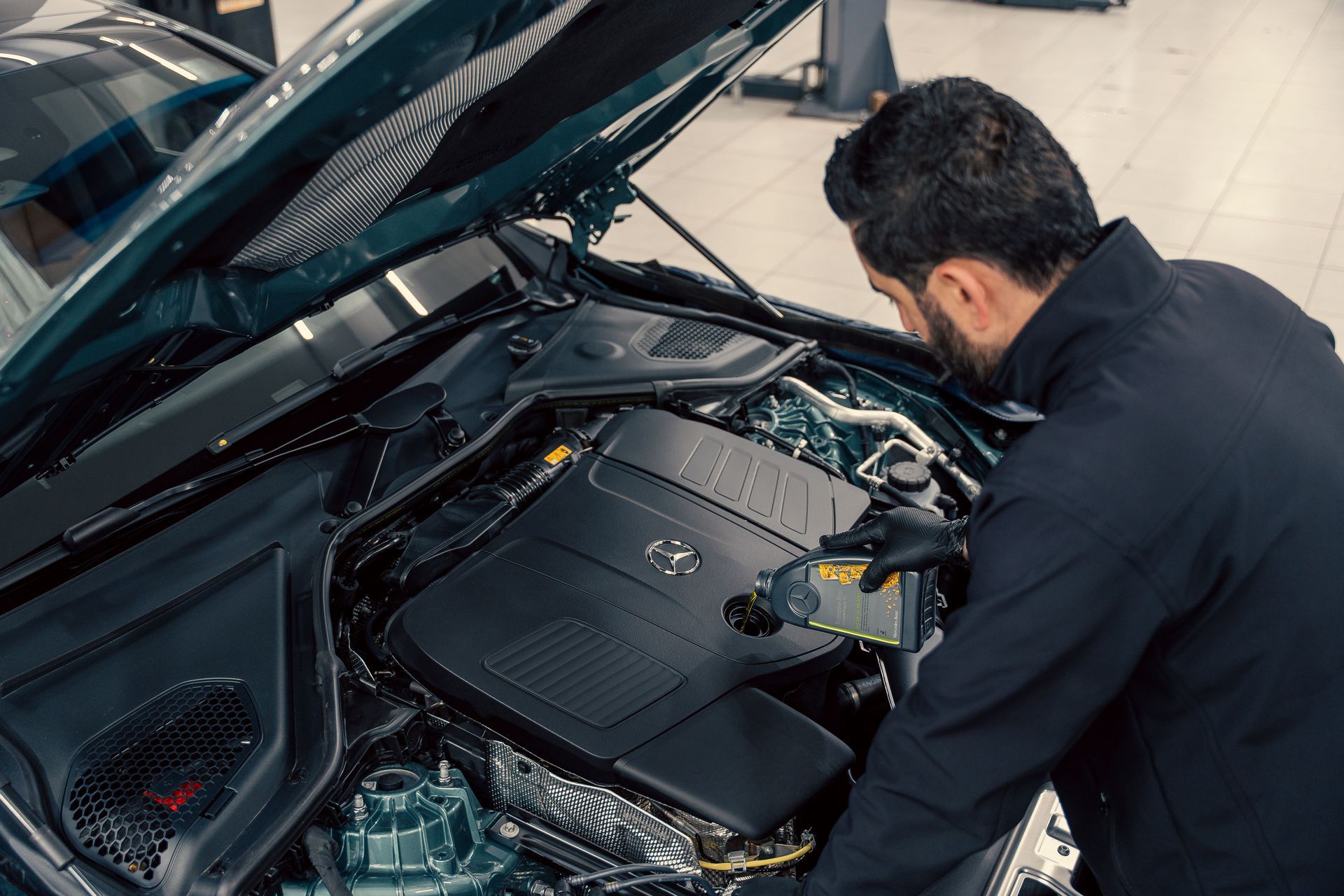
A full-service oil change drains the old oil, installs a fresh filter, refills to the correct spec, tops off other fluids, checks tire pressure, and runs a visual inspection of lights, belts, and hoses — all in one visit.
The conventional vs. synthetic decision matters more in Minnesota than in warmer climates. Synthetic oil flows at temperatures as low as -40°F , protecting engine components during cold starts before the oil fully circulates. Conventional oil can thicken and slow down in those same conditions. Your technician can recommend the right type based on your vehicle's age, mileage, and the manufacturer's specification.
For most modern vehicles, synthetic oil change intervals fall around 5,000–7,500 miles , while conventional oil typically calls for 3,000–5,000 miles . Cold-weather driving puts extra stress on oil — frequent short trips in low temps prevent the engine from fully warming up, which accelerates breakdown. Fall is a natural reset point before the season that is hardest on both engine oil and the driver.
Tire Services: What Gets Checked and Why It Matters Before Snow Season
A pre-winter tire inspection covers tread depth, pressure, sidewall condition, and wear patterns — each one a direct indicator of how the tire will perform on wet or snowy pavement.
Tread depth is the clearest safety signal. Use the penny test: insert a penny into the tread groove with Lincoln's head pointing down. If you can see the top of Lincoln's head, tread is at or below 2/32 inches — replace the tire . A safer threshold before winter is 4/32 inches ; at that depth, wet stopping distances increase noticeably. The quarter test (Washington's head) gives you that 4/32 warning earlier.
Uneven wear patterns often point to an alignment issue, not just tire age. If one edge of the tread is significantly more worn than the other, new tires will wear the same way unless the alignment is corrected first. Sidewall cracking or bulging are separate concerns — those indicate structural damage that no rotation or inflation fix can address.
Bundling a tire rotation with your oil change is efficient and protective. Rotating tires every oil change — or every other change, depending on wear rate — evens out the wear across all four corners, extending overall tire life. While the tires are off, a technician can also do a quick brake inspection, since the rotor and caliper are fully visible at that point. Learn more about full-service tire services to understand what the visit covers.
Should You Also Check Your Alignment This Fall?
Summer road construction and potholes can knock a vehicle's alignment out of spec without any single dramatic event — the shift happens gradually, and you may not notice until a new set of tires starts wearing unevenly.
Misalignment causes the tire to scrub against the road at a slight angle with every rotation. That friction wears the tread faster on one side, shortening the life of even brand-new tires. Checking alignment after tire work — or at least after a summer of heavy driving — protects the investment you just made in rubber.
Heading Into Winter: One Appointment Covers More Than You Think
Handling oil and tires together at a local independent shop eliminates a separate dealership trip and gives one technician a complete picture of your vehicle's current condition — leading to more consistent recommendations over time.
Dealership quick-lanes are brand-specific and often rotate technicians, so the person working on your car today has no context from your last visit. An independent shop that services all makes and models builds that history with your specific vehicle, which changes the quality of the conversation you have about what actually needs attention.
As temperatures drop further into fall, it is also a practical moment to confirm your heat system is working before you need it. If your defroster or cabin heat has been sluggish, an AC and heating system check fits naturally into the same pre-winter appointment window.
Booking a combined oil change and tire visit before the first Minnetonka snowfall is the most efficient way to close out the driving year with confidence — one stop addresses the two items most directly tied to cold-weather performance.
Schedule your fall service appointment with BAM! Automotive before Minnesota winter arrives.